


- HOME
- UV PAPER IMPRESSION
- UV PAPER PRODUCTS
- UV PAPER PROCESS
- UV PAPER BLOG
- UV PAPER CULTURE
- UV PAPER TALENTS
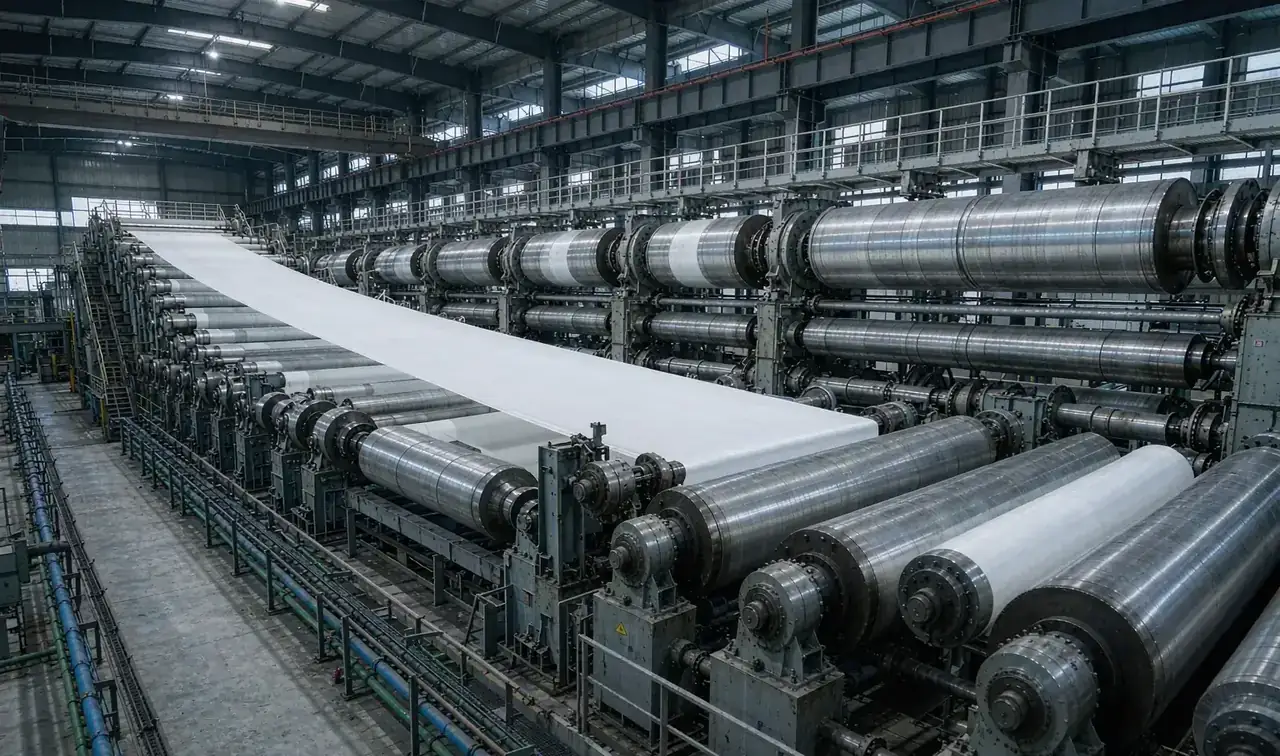
Modern papermaking turns fibre and water into a continuous sheet up to 6.6 metres wide at speeds that can exceed 1,200 metres per minute, using four core stages: stock preparation, forming, pressing and drying, followed by finishing. Understanding these stages explains why paper grades behave the way they do on press, and why two sheets that look identical can perform very differently.
This walkthrough follows the process inside a modern integrated mill producing coated woodfree and cast coated paper.
Paper is made from cellulose fibres. Integrated mills use either virgin chemical pulp or recovered (recycled) paper, and many mills run both. Recovered paper arrives in bales graded by type; it is pulped, then cleaned of contaminants such as plastics, staples and adhesives.
The pulp is refined to develop fibre-to-fibre bonding potential. Additives are dosed precisely at this stage: fillers such as calcium carbonate for brightness and opacity, sizing agents that control liquid absorption, retention aids, and optical brightening agents. For coated grades, the coating colour, a slurry of clay, carbonate and binders, is prepared in a separate kitchen and kept under constant agitation.
The prepared stock, now more than 99 percent water, is pumped to the headbox, a pressurised distributor that spreads the suspension evenly across the full width of the moving wire. As water drains through the wire, fibres interlock into a wet sheet.
Uniformity at this stage is everything. Variations in fibre orientation across the web become CD (cross-direction) streaks, and variations along the web become MD (machine-direction) barring. Both are visible in print, which is why headbox profiling and wire selection receive so much engineering attention.
The wet sheet leaves the wire at roughly 20 percent solids. It passes through a press section, where felt-covered rolls squeeze out more water mechanically, because mechanical dewatering costs far less energy than evaporating it. The sheet then enters the dryer section, a series of steam-heated cylinders that bring it to final dryness.
Drying must be controlled to avoid defects: too fast, and the sheet curls or cockles; too uneven, and moisture streaks appear. Modern machines control dryer surface temperature zone by zone and measure moisture across the web with infrared scanners.
For coated woodfree and cast coated paper, the dried base sheet is coated in one or more layers. Coating is applied by blade, rod or curtain coater, then dried again. Multiple layers allow different functions: a pre-coat for smoothness and coverage, a top coat for gloss, brightness and print performance.
Cast coated paper takes one extra step. While the coating is still wet, the web is pressed against a heated, mirror-polished drum. The coating dries in contact with that polished surface and takes on its finish. No amount of later calendering can reproduce the smoothness created at the moment of drying.
The finished sheet passes through a soft-nip or super calender for coated grades, is scanned for defects, and is wound onto reels at the reelers. Each reel is labelled with grade, grammage, width, order number and direction. From here, reels go to the finishing hall for slitting into customer widths, rewinding and wrapping.
A modern mill measures the web continuously, not just at the end:
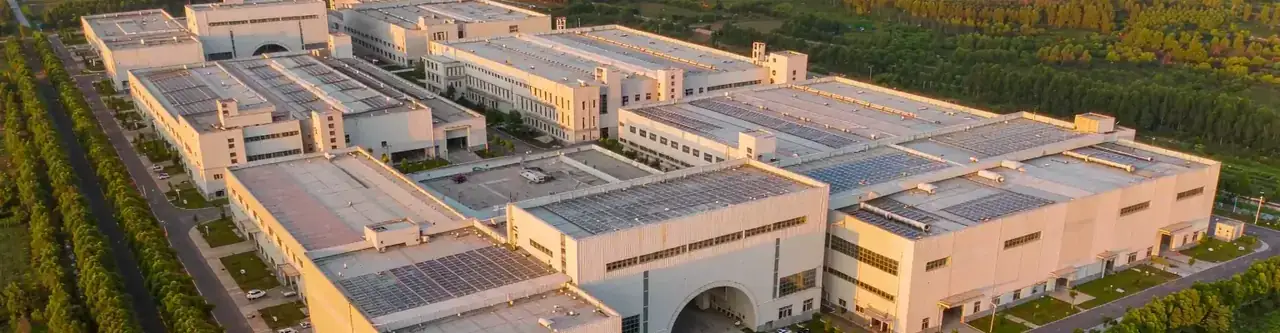
At China UV Paper, these controls run on a 6,600 mm wire across a portfolio of coated woodfree, cast coated and specialty grades, with total capacity of 1.56 million tonnes per year. Every reel carries a certificate so converters can trace what arrived in the warehouse back to the machine run that produced it.