


- HOME
- UV PAPER IMPRESSION
- UV PAPER PRODUCTS
- UV PAPER PROCESS
- UV PAPER BLOG
- UV PAPER CULTURE
- UV PAPER TALENTS

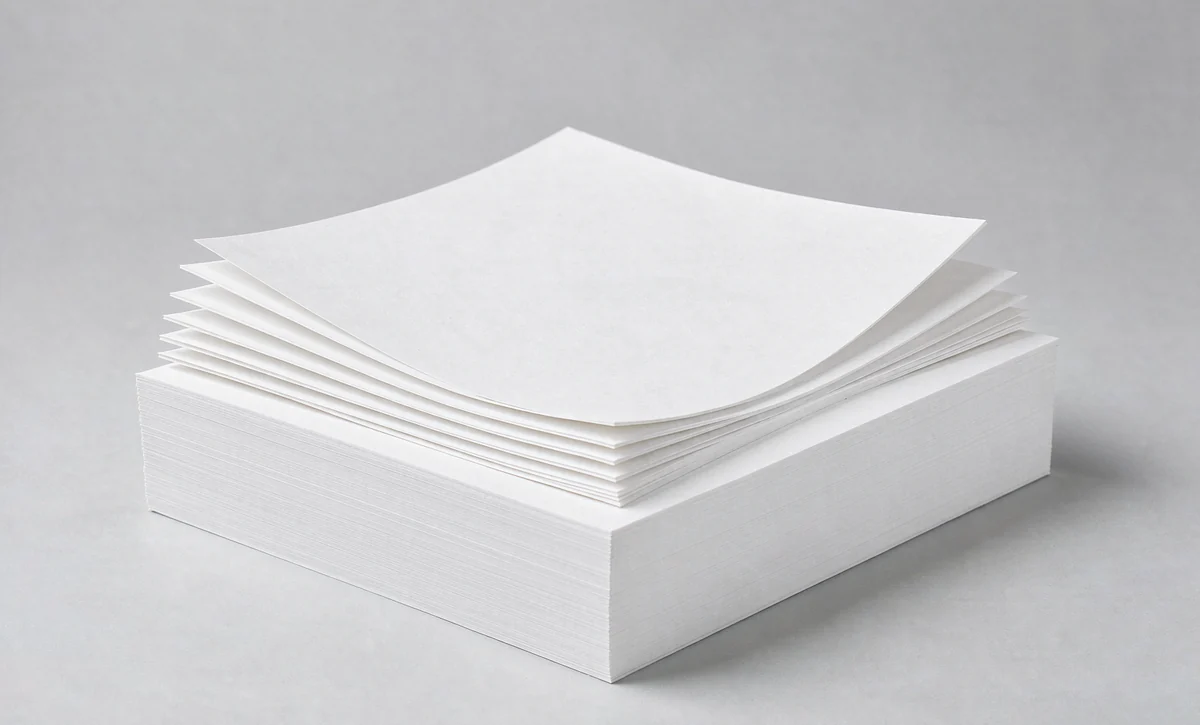
Woodfree paper and cast coated paper both start from woodfree fibres, but they differ in one decisive step: cast coated paper is dried against a mirror-polished drum, giving it a glass-smooth, high-gloss surface that standard woodfree paper does not have. Choosing between them is not about which paper is better in the abstract. It is about which surface your printing process, artwork and end use actually require.
This comparison breaks down the differences in plain language so print buyers can specify with confidence.
'Woodfree' does not mean the paper contains no wood. It means the pulp contains no mechanical (groundwood) fibres. Woodfree paper is made from chemical pulp, where the lignin has been dissolved out during cooking. Removing lignin is what makes the sheet resist yellowing over time.
The practical consequences are a brighter, stronger, more stable sheet. Woodfree paper is the standard base for office printing, books, brochures, notebooks and most coated printing papers, including cast coated grades. The term says nothing about whether the sheet is coated; that is a separate decision.
| Property | Woodfree paper (uncoated) | Cast coated paper |
|---|---|---|
| Surface | Natural, slightly textured | Mirror-smooth, cast impression of a polished drum |
| Gloss | Low, matte appearance | High gloss grades 80-95 GU; matte/satin variants available |
| Ink behaviour | Ink absorbs into fibres | Ink stays on the surface (high holdout) |
| Print detail | Good for text; halftones look softer | Excellent for fine screens, small type, metallics |
| Typical grammage | 60-120 gsm text; 120-300 gsm cover | 70-120 gsm labels; 180-300 gsm board |
| Best for | Books, reports, stationery, letterheads | Premium labels, cosmetics cartons, covers |
| Cost position | Lower cost per tonne | Premium, capital-intensive casting section |
| Writeability | Excellent, pen-friendly | Poor for handwriting, coating is non-absorbent |
Novels, annual reports, instruction manuals and forms are dominated by body copy. Uncoated woodfree gives comfortable contrast for reading, takes pen and pencil well and costs less per tonne. Coating adds nothing the reader can see in a 9-point paragraph.
Letterheads, envelopes, notepads and internal documents need a surface that accepts inkjet and laser toner predictably and can be written on after printing. Uncoated woodfree is engineered for exactly this.
When a campaign runs to hundreds of thousands of copies and the artwork has no photographic demands, the paper cost difference between coated and uncoated becomes material at scale.
A wine, cosmetics or specialty food label is a miniature advertisement. Cast coated paper reproduces fine typography, rich solids and metallic inks with a crispness uncoated paper cannot approach. It also survives wet conditions on bottle lines better when paired with the right adhesive and laminate.
Cosmetic cartons, pharma outer packaging and confectionery boxes are judged by touch as much as by print. The cast surface reads as quality before a single word is read.
Where continuous-tone images must reproduce shadow detail without dot gain swallowing it, cast coated paper's high ink holdout preserves what the camera captured.
Ask these three questions in order:
Yes, and many brands do. A cosmetics line might use cast coated labels on the bottle, an uncoated woodfree leaflet inside the carton and a cast coated folding boxboard outer. Matching brightness and shade across the components keeps the family coherent.
China UV Paper produces coated woodfree and cast coated grades on the same 6,600 mm machine platform, with quality control covering brightness, gloss, smoothness, basis weight and moisture on every reel. If you are unsure which grade suits your artwork, send us the print specification and we will recommend a trial grade before you commit.